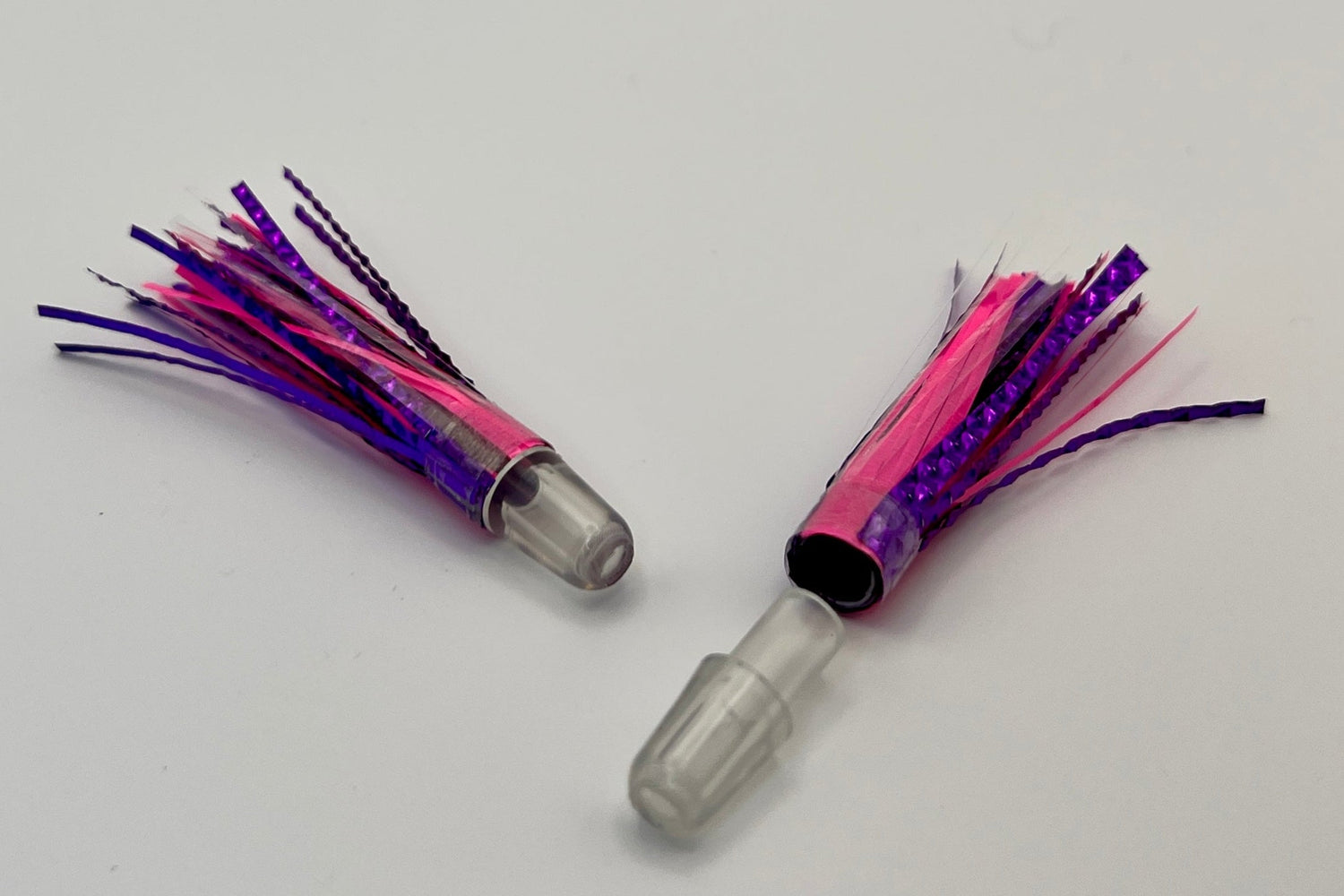
Making and Rigging Trolling Flies
Share
Adapted from Capt. John King's articles "Making Trolling Flies" Parts I and II (December 2010) and "Double Loop Knot" (April 7, 2009), first published on MichiganSportsman.com. Originals: Part I · Part II · Double Loop Knot.
John credited George Richey's Sparkle Fly as the start of the trolling fly. His own method uses tape instead of thread, and he called fly building "a great offseason project."
Building the fly
- Mylar: cut strands 3–3.5" long.
- Reverse lay: lay the Mylar pointing forward over the bullet head, then fold it back so it flares and pulses in the water.
- Tape method: wrap the head with double-sided tape, lay the Mylar on it, then overwrap with 1/4" clear 3M tape.
- Less is more: a thinner, less bushy fly has better action than a full one.
- Bullet heads: John preferred USA-made heads with a very fine taper (about .002") over imports with a coarse .020" edge that can nick leaders.
Rigging the fly
- Bead drop: five 8mm beads between the head and hook.
- Leader: stiff 50# mono. Never go under 40#.
- Hook: VMC 9650 1/0 treble, tied with a Palomar or Trilene knot.
- Inspect the last 6" of leader after every fish.
Leader length behind the flasher
- Rule of thumb: 2.5× the attractor's length. John usually ran about 2×.
- 10" BTI: 16" for spring Coho; 20–25" for July–August Kings.
- 12" flasher: 36–42".
The double loop knot
John tied flies to flashers with a double loop knot so the fly swings freely and you can change colors fast. Original step-by-step photos are in the Double Loop Knot article.
Shop the setup: USA bullet heads · Trolling leaders · Ready-made trolling flies · Flashers