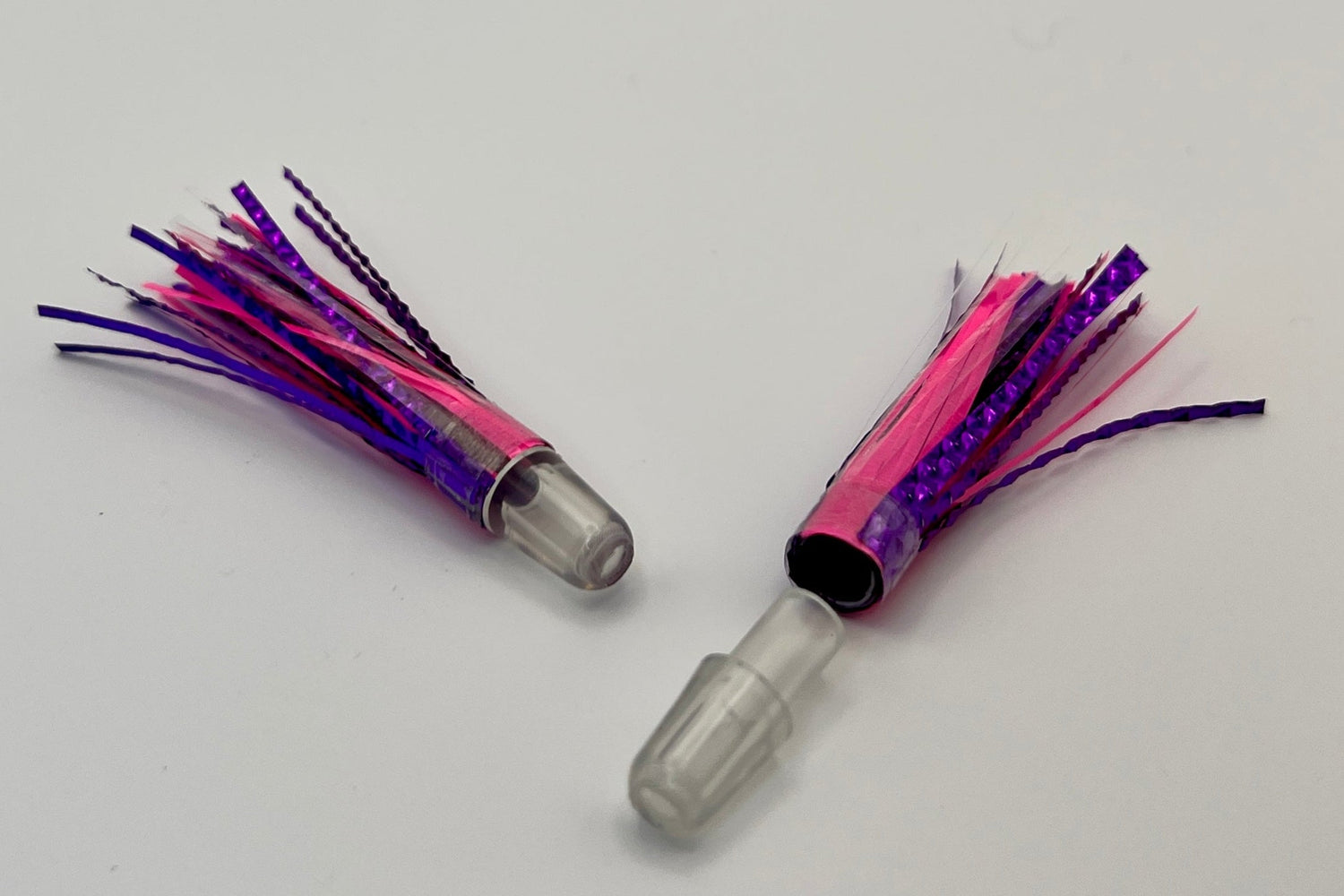
Trolling Speed Chart by Product
"Speed sends out your invitation. So, you'd better get it right!" Capt. John King called trolling speed the most vital part of Great Lakes trolling. This chart collects the speeds John reported for each of our products. They're his field results, not fixed rules, so use them as a starting point.
Speed by product
| Product | John's sweet spot | Range that produced | Notes |
|---|---|---|---|
| Salmon Buster™ spoons (riggers, divers) | 2.0–2.6 mph | About 1.2 to 3.0+ mph (some bites 3–4 mph) | Doesn't stall when you slow down to fight a fish |
| Salmon Buster spoons on the surface (planer boards) | 2.5 mph GPS speed over ground | 1.5 to 3+ mph | April Browns: 2.4–2.6 mph |
| Flashers and flasher + meat rig combos | 1.5–2.0 mph | 2.2 mph or less; 1.2–1.4 mph in flat calm for deep Kings | John: dodgers, flashers and cowbells call for 2.2 mph or less |
| Meat rigs with herring strips (Magnum heads) | 1.5–1.8 mph | 1 to 3+ mph (2003 log) | Watch for a 15–30° downrigger cable angle |
| Meat rigs with whole herring (Super Mag heads) | 1.5–2.0 mph | Not speed sensitive | Give whole bait a slight bend at 2.2 mph and slower |
| Rip Teezers™ | 2.2 mph | About 1.3 to 3.0+ mph | Designed to keep rolling down to about 1.2 mph |
| Trolling flies behind flashers | 1.5–2.0 mph | 2.2 mph or less | Same speed as the flasher |
Speed by situation
| Situation | John's speed |
|---|---|
| Deep summer Kings at mid-day (38–44°F water) | 1.5–2.0 mph |
| Deep Kings in flat calm | 1.2–1.4 mph |
| Typical summer spread | About 2.0 mph |
| Fighting a fish | Slow to about 1.2 mph so other lines keep fishing |
| Searching new water | Faster speeds (around 2.5 mph with spoons) cover more water |
Getting speed right
- GPS isn't the whole story. GPS shows speed over ground, not the speed of your lures. Underwater currents (John found up to 1 mph or more below 50' after a blow) and wind change lure speed.
- Watch your cables. "Cable watching never breaks and it won't lie to you." Downrigger cables should hang straight down. Cables angling to one side mean current or wind is pushing your lures sideways.
- Read the turns. If the outside (faster) rods go off on a turn, speed up. If the inside (slower) rods get bit, slow down.
- Match the catchers. When you're not catching, match the speed of boats that are.
- Use sea bags (drift socks) to slow down in a following sea.
- Check your baits. Watch lures and bait boatside to make sure they're working before you set them.
Learn more
Speed Kills: Getting Trolling Speed Right · Trolling Cheat Sheet · Salmon Buster Spoon Selection Guide · Meat Head Fit Guide